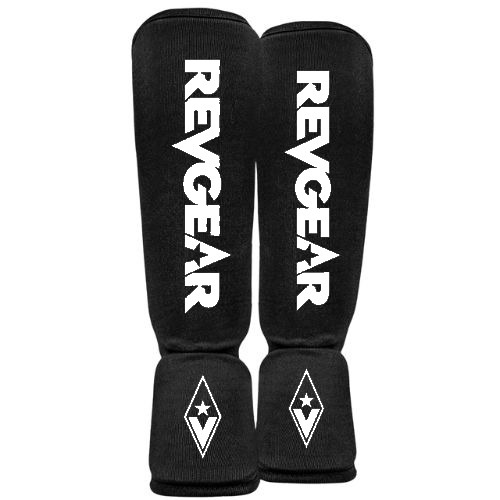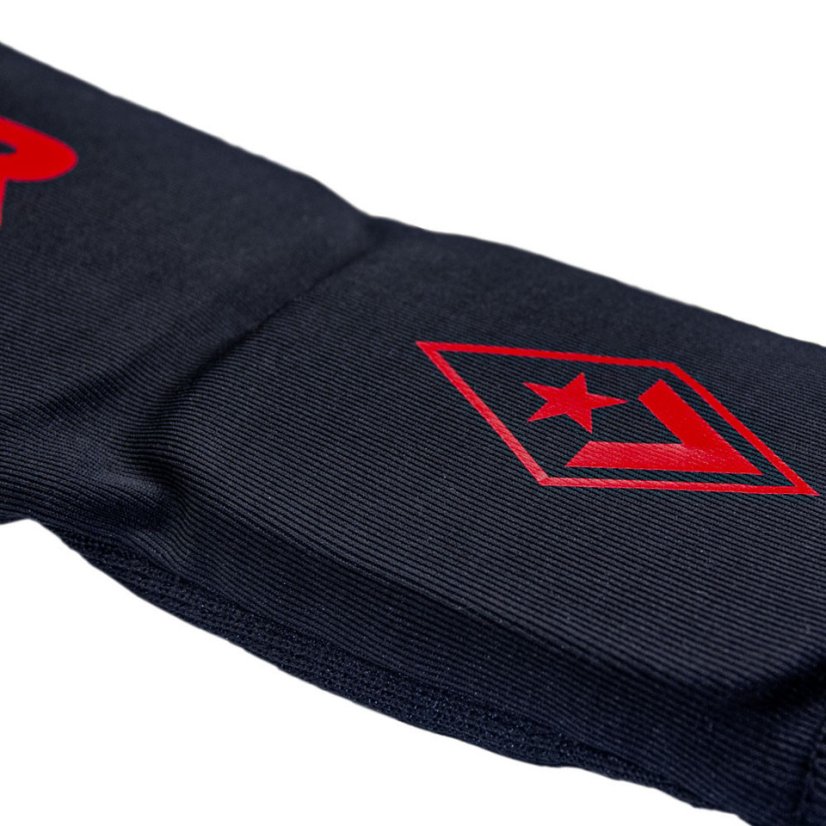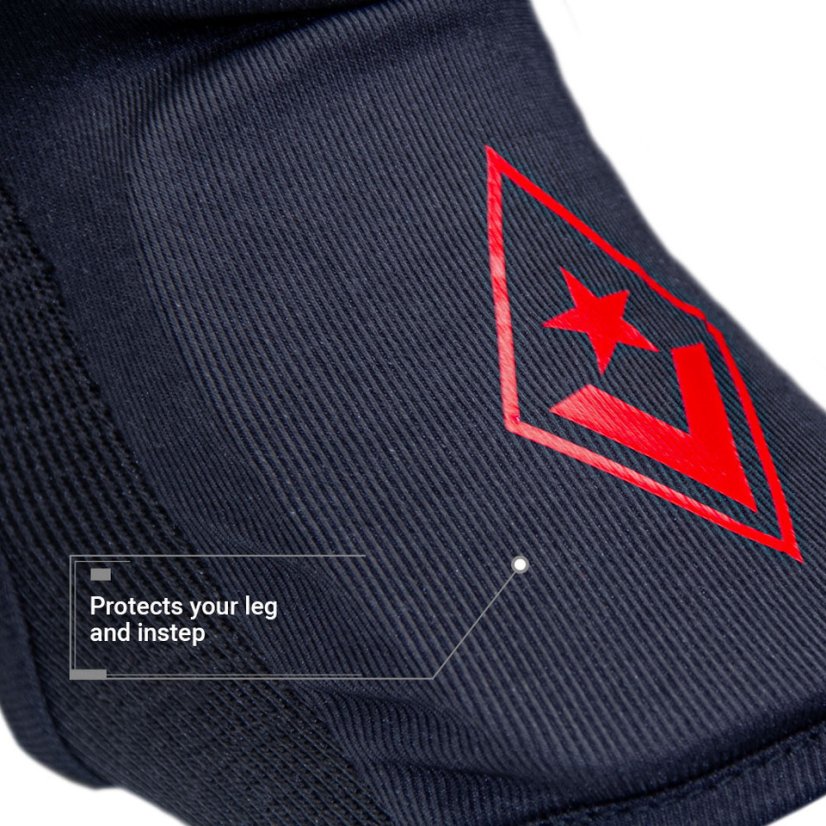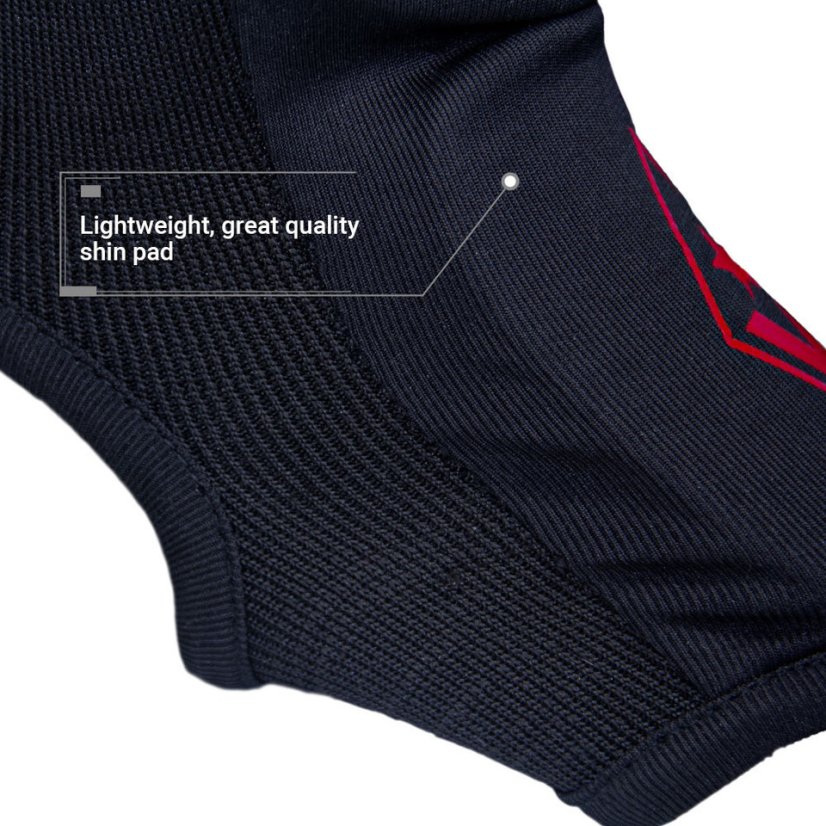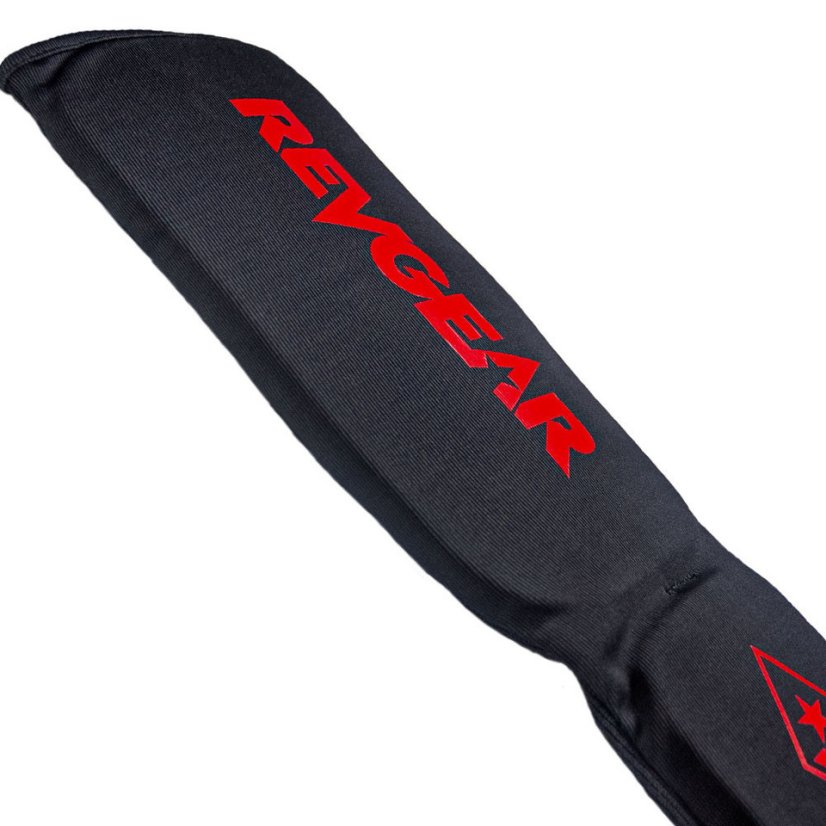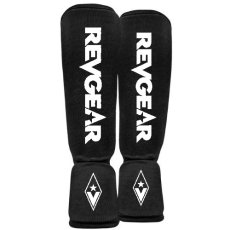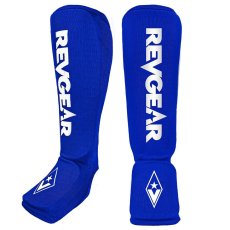

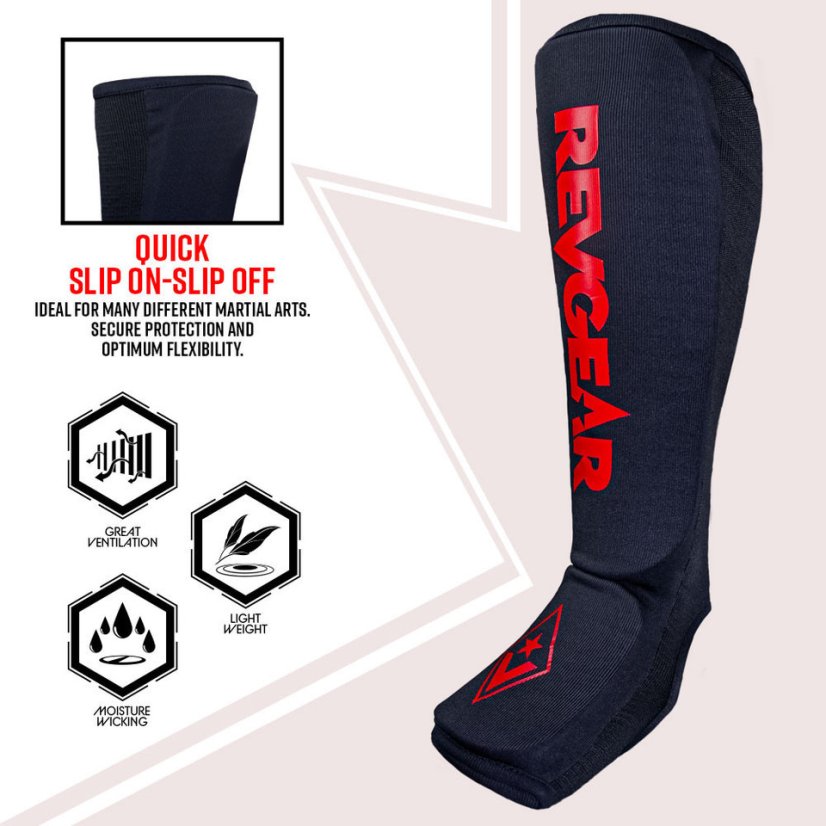
Shin guards REVGEAR Muay Thai - black
Specify product selection
Variant does not exist
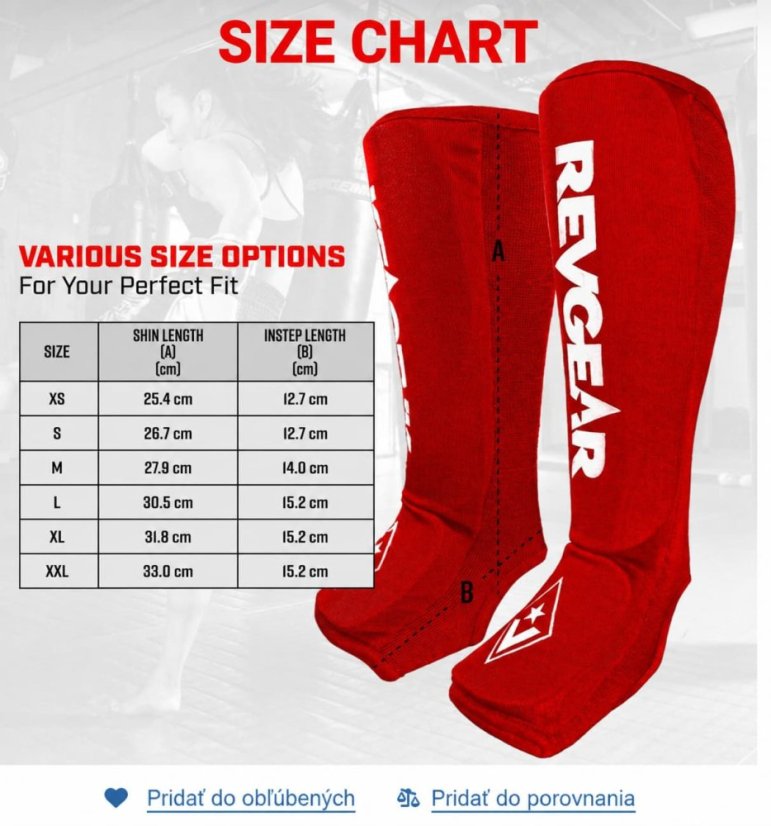
XS S M L XL 2XL
24,90 EUR
RevGear Key Features
– Suitable for light and amateur sparring
– Fully compliant with IFMA (Muay Thai) rules
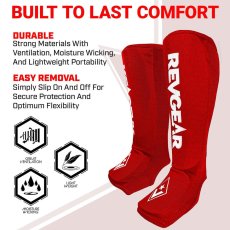
– Comfortable slip-on sock design
– Shin, ankle, and instep protection
– Sizes for both youth and adults
More info
Product code: P00567 Shipping and Payment

About the Product

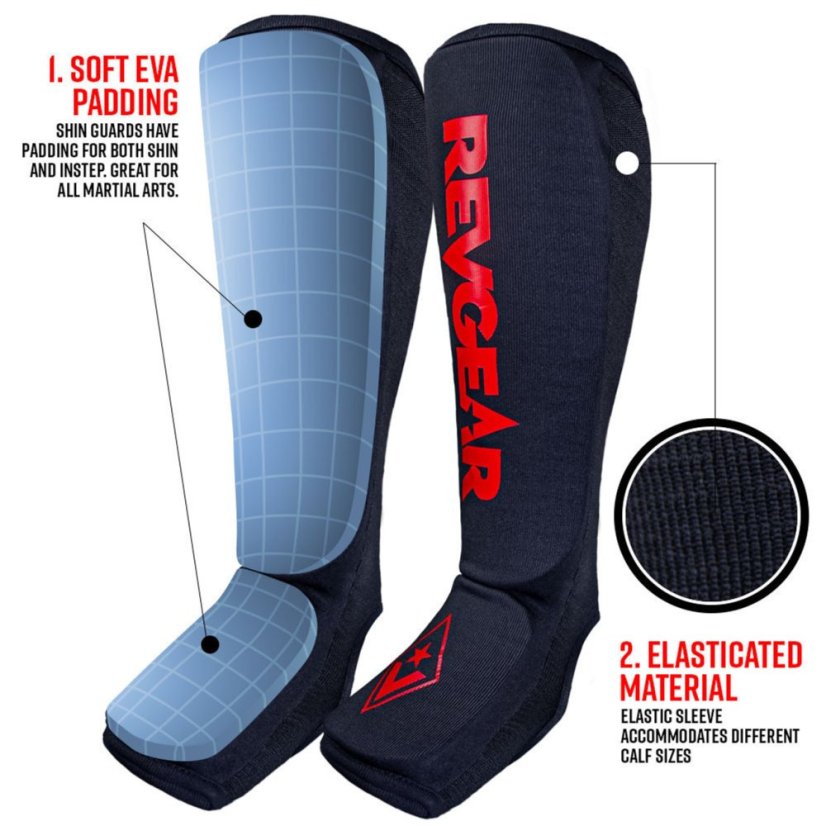
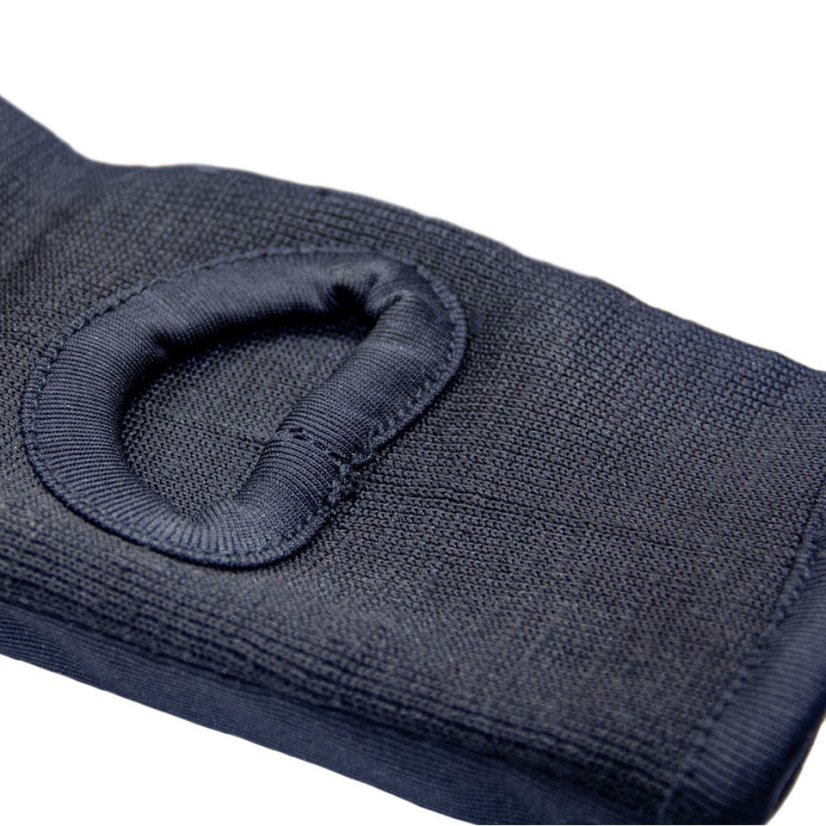
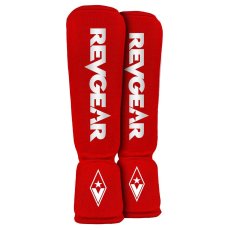
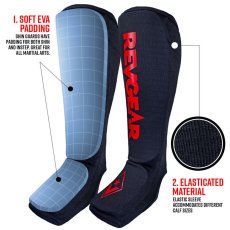
Revgear Muay Thai Shin Guards are suitable for light sparring and amateur Muay Thai rules. Ergonomic design ensures a perfect fit to the shin area. With their "sock" design, they are easy to put on and provide a comfortable fit while maintaining freedom of movement. This versatility is appreciated not only in Muay Thai, but also in light sparring in MMA where they can be a key element for limited grappling.

Impact absorption and protection around the ankle and instep are priorities of these pads, which helps minimize the risk of injury. However, it is important to note that these pads are designed primarily for light and amateur sparring. If your main goal is intense sparring of heavier weights, we recommend choosing from the classic shin guards. With full compliance to amateur (IFMA) Muay Thai rules, these pads are available in multiple sizes to suit a wide range of ages from youth to adult. Ensure protection and comfort with Revgear Amateur Muay Thai shin guards and keep yourself safe while training.

Details

  • Ergonomically designed shin guards for light sparring and amateur Muay Thai rules
  • "Sock" design for easy fitting and comfortable wearing
  • Universal use also suitable for light sparring in MMA with limited grappling
  • Shock absorption and ankle and ankle protection to minimize injury
  • Full compliance with amateur (IFMA) Muay Thai rules
  • Available in sizes for youth and adult
Parameters
Material Mixed fabric, Polyester
Color Black
Sport MMA, Kickbox, Muay Thai, Grappling
Target For men, For women

Protective gear: correct use and care

Protective gear only works when it fits properly and stays clean. A badly moulded mouthguard doesn't protect the way it should, and damp shin guards break down from the inside. The few minutes after training decide how long your gear lasts.

How to mould a SISU mouthguard
The most important difference: SISU is not moulded in boiling water. Boiling water damages the material. Use water that is hot to the touch but not boiling.
What you'll need
  • A bowl of hot, not boiling, water
  • A fork or spoon to lift it out
  • A mirror
Step by step
  • Wash your hands and rinse the mouthguard
  • Before you soak it, dry-fit it to see how the bite surface sits on your teeth
  • Place the mouthguard in the hot water and let it soften
  • Fit it onto your teeth and mould it around every tooth, molars included, not just the front ones
  • Spread the material so it covers the full surface of your teeth
  • Close your lips and sip air gently, the suction finishes the shaping
What to avoid while moulding
  • Boiling water
  • Leaving the back teeth uncovered
  • Stretching the material too far, which creates oversized openings
  • Sucking in air too hard, which leaves the fit uncomfortably tight
  • Trimming it with scissors, which strips the mouthguard of its protective properties
SISU can be remoulded up to twenty times. Just put it back in hot water, it returns to its original flat shape on its own and you can start again. That helps when teeth shift and during treatment with braces.
For the warranty to apply, the mouthguard must be moulded along the entire dental arch, not just the front teeth. With braces, use the larger size and check the moulding with your orthodontist.
Standard boil & bite mouthguards

Unlike SISU, standard mouthguards are moulded in boiling water. Always follow the instructions of the specific manufacturer, the procedures differ between brands.

  • Soak it for as long as the manufacturer specifies, the material has to soften
  • Cool it briefly in lukewarm water so you don't burn yourself
  • Fit it on your upper teeth, bite down firmly and press your tongue against the roof of your mouth
  • Press the material against your gums from the outside with your fingers
  • Take it out and cool it in cold water, which sets the shape
If the fit isn't right, most mouthguards can be remoulded. The number of attempts is limited though, the material loses a little with each round.
How to clean and store a mouthguard
After every session
  • Rinse it with cold water as soon as you take it out of your mouth
  • Clean it with a soft brush and soapy water or a mouthguard cleaner
  • Let it dry completely before you put it away
  • Store it in a vented case, not loose in your bag
What to avoid
  • Hot water when cleaning, the mouthguard would lose its shape
  • Abrasive toothpaste
  • Dishwasher, steriliser, microwave
  • Leaving it in the car or in the sun, heat will warp it
  • Chewing on it outside training
When to replace it: cracks, torn spots or bite-through damage · it no longer holds onto your teeth · warping that remoulding won't fix · odour that stays after cleaning.
Shin guards
Getting the fit right
  • The guard has to cover the shin along its full length and must not rotate to the side
  • The instep pad belongs on top of the instep, not under it
  • Fasten the straps firmly, but not so tight that they restrict circulation
Care after training
  • Take them out of your bag and let them dry at room temperature
  • Wipe the surface with a damp cloth, treat the inside with a gear spray
  • Treat leather models with leather conditioner every two months
  • Pull lint out of the velcro regularly, otherwise it stops holding
Guards with a hard shell or foam padding don't belong in the washing machine or the dryer. Fabric guards without a rigid insert are washed according to the label, at a low temperature and without fabric softener.
When to replace them: cracks in the foam or shell · the padding has flattened and you feel the impact · stretched straps · the instep pad twists out of place.
Headgear
Getting the fit right
  • Headgear must not shift when you move your head or narrow your field of vision
  • The cheek pads sit on your cheekbones, not in your line of sight
  • Tighten the chin strap so the headgear stays put on its own
Care after training
  • Wipe out the inside and let it dry outside your bag
  • Wipe the surface with a damp cloth, sweat contains salt and salt damages the material
  • Treat leather headgear with conditioner every two months
  • Don't dry it on a radiator or in the sun, it damages both the material and the print
When to replace it: the foam has hardened or cracked · the chin strap or closure no longer holds · the headgear slips during sparring.
Body protectors and groin guards
Groin guards
  • The cup has to sit firmly and must not shift while you move
  • Always take out a removable cup before washing
  • Wash the fabric part after every session, at a low temperature and without fabric softener
  • Wipe the cup with a damp cloth and let it dry
Body, chest and forearm protectors
  • Wipe them with a damp cloth after training and let them dry outside your bag
  • Never put foam or shell components in the washing machine
  • Check the straps regularly, on chest protectors they hold the whole thing in place
When to replace: a cracked cup · flattened or crumbling foam · stretched elastic and straps that no longer hold.
Protective gear for kids
  • Check the size every season, kids grow and gear that doesn't fit doesn't protect
  • Always mould a child's mouthguard with an adult present
  • With braces, check the procedure with an orthodontist
  • Set up a routine after training, kids won't remember the care part on their own
  • Put a moisture absorber in the bag, kids' gear stays in there the longest
What to avoid with all protective gear
  • Washing machine and dryer for anything with foam, gel or a hard shell
  • Drying on a radiator, in the sun or with a hairdryer
  • Leaving gear in a closed bag overnight
  • Storing it somewhere damp, in a garage or a basement
  • Harsh cleaners and alcohol on leather and PU surfaces
  • Sharing protective gear, and never sharing a mouthguard
How long protective gear lasts depends on how often and how hard you train, the type of impact and the material. Poor care shortens it considerably. Don't repair damaged gear, it no longer does its job.
Manufacturer Revgear Sports
Address 14768 Pipeline Ave, Chino, CA 91710, USA
Email info@revgear.com
Manufacturer's representative in the EU ROK corp s.r.o.
Address of representative in the EU Lipůvka 350, Lipůvka, Czechia
EU representative email admin@rokcorp.eu
%s ...
%s
%image %title %code %s
%s