star 1star 2star 3star 4star 5(3)Rating value is 5 of 5
Key Features:
– Material: 100% durable cotton
– Width: 1,5" (4 cm) – standard size
– Variants: Solid, white, or black stripe
– Colors: grey, yellow, orange, green
– Sizes: M1, M2, M3, M4 for kids 4+ years More info
REVGEAR kids’ belts for Brazilian Jiu Jitsu combine traditional craftsmanship with a practical design. Made from 100% cotton and 1.5″ (4 cm) wide, they offer comfort, durability, and easy tying. Available in four colors (grey, yellow, orange, green) in solid or with a white or black stripe to denote rank. Ideal for children aged 4+ for training and competition.
1× REVGEAR kids BJJ belt (size & color of your choice)
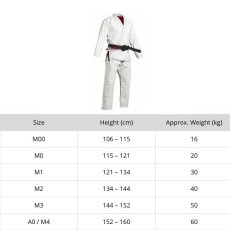
Size chart
Size
Height (cm)
Approx. Weight (kg)
M1
121–134
30
M2
134–144
40
M3
144–152
50
M4
152–160
60
Parameters
Material
Cotton
Color
Sport
BJJ
Target
For children
Gi and belts: washing, drying and care
Proper care helps keep your gi in good condition for longer and preserves its shape, colour and fabric strength. Pay the closest attention to washing temperature and drying method – high temperatures are exactly what causes a cotton gi to shrink noticeably. Always check the label of the specific model as well, the manufacturer's instructions take precedence over general recommendations.
How to wash a gi
Recommended procedure
Wash the gi after every training session.
Use cold water or a delicate cycle up to 30 °C.
Wash inside out, especially if the gi has patches, embroidery or prints.
Skip fabric softener, it can clog the fibres and reduce the fabric's absorbency.
Avoid chlorine bleach, it weakens cotton fibres. Use it only if the manufacturer explicitly allows it.
Untie the trousers before washing and don't leave the drawstring knotted.
When you can't wash it right away
Don't leave a damp gi sealed in your bag.
Take it out as soon as possible and let it dry freely.
A dried gi is not a washed gi, so postpone the wash by no more than a day.
Training several times a week? A second gi can be a practical solution, so one set always has enough time to dry through properly.
How to dry a gi without unnecessary shrinkage
A cotton gi can change its measurements noticeably under heat. To keep shrinkage to a minimum, dry the gi naturally in the air.
Air dry, ideally hung up or spread out so air can circulate around it.
Hang the jacket by the shoulders, not the collar – the collar is the heaviest part and would stretch.
Dry a coloured gi out of direct sunlight so the colour doesn't fade unnecessarily.
Hang the trousers by the waistband or lay them flat so the fabric doesn't stretch.
Make sure the gi is completely dry before storing it. The collar dries the slowest.
Only use a tumble dryer if the manufacturer permits it for that specific gi. With cotton gis, heat can cause shrinkage.
Blood and sweat stains
Blood
Use cold water on blood stains – hot water can set the blood proteins into the fibre.
Treat the stain as early as possible, while it is still wet.
For dried stains, soaking in cold water before washing can help.
Sweat and yellowed areas
Pre-treat the most heavily used areas, such as the collar and underarms, with a stain remover.
For a white gi, choose a chlorine-free stain remover suitable for white cotton.
Always follow the instructions of the specific cleaning product.
With coloured gis, test the product on a less visible spot first so the colour isn't affected.
Coloured gis and the first wash
Wash a new coloured gi separately the first time, the dye may run.
Don't wash a coloured gi together with white laundry.
A lower washing temperature helps limit dye run and fading.
Wash inside out, especially with embroidery, patches or other decorative elements.
Dry out of direct sunlight, which can gradually lighten the colours.
Gradual fading of a coloured gi is natural with use and washing. How quickly it happens depends on the dye, the material and the washing method, among other things.
Shrinkage and choosing a size
Cotton gis may change dimensions after the first few washes. How much depends on the specific material, the way it was made and the manufacturer's instructions.
Always use the size chart of the specific brand, sizing systems differ between manufacturers.
With pre-shrunk gis, the change in dimensions is usually smaller than with non-pre-shrunk cotton.
Gentle washing and drying without high temperatures helps limit shrinkage.
Ripstop materials generally shrink less than classic cotton weave, but it always depends on the specific product.
Don't automatically buy a larger size assuming the gi will shrink significantly in the wash. What matters are the figures and recommendations from the manufacturer of that particular model.
Belt care
Like a gi, a belt mainly needs proper drying and gentle washing. For each belt, follow the manufacturer's instructions.
Untie the belt after training and let it dry freely, don't put it away rolled up in your bag.
If you wash the belt, choose a delicate cycle and a low temperature.
Avoid bleach and harsh cleaning products.
Wash dark belts separately, the dye can transfer onto light gis.
Once fully dry, roll or fold the belt and store it somewhere dry.
When to replace a belt: when it is visibly worn, the stitching is coming apart, the ends are fraying, or it no longer holds its shape and knot.
What to avoid when caring for a gi
The most common mistakes
Washing at a high temperature
Tumble drying gis that aren't approved for it
Using fabric softener or harsh products
Ironing directly over patches, embroidery and prints
Leaving a damp gi in your bag or in the machine
Drying a coloured gi in direct sunlight for long periods
When to replace a gi
Tears in high-stress areas, especially the sleeves and collar
A softened or damaged collar that no longer holds its shape
Failing seams that can no longer be sensibly repaired
Shrinkage that leaves the gi no longer matching the size you need, or uncomfortable to train in
Minor damage such as a loose seam is worth repairing as soon as possible. A timely repair can prevent further damage to the fabric.




 Key Features: